


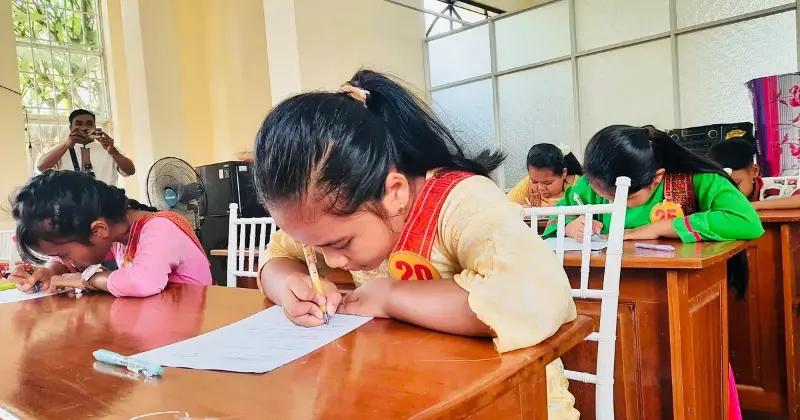
Entering first grade is a major turning point for every child, but for students from ethnic minority communities, that journey is even more challenging. Leaving their families, where they are accustomed to using only their mother tongue, they must adapt to the school environment and absorb general knowledge in Vietnamese.
Removing language barriers and relieving psychological pressure for students.
Having been involved in education in disadvantaged areas for many years, Ms. Thanh Thi Ngoc An, Deputy Principal of Hong Thai Primary School (Hong Thai commune, Lam Dong province), believes that the biggest obstacle for ethnic minority children entering first grade is "the disconnect in academic language and psychological space." At home and in their villages, these children only use their mother tongue in daily life. When they enter first grade, they suddenly have to receive the general education program in Vietnamese, a second language in which they have not yet accumulated the minimum vocabulary to understand and express themselves.
As a result, students face the pressure of "reverse thinking," where they have to think in their native language and then translate it into Vietnamese in their heads to speak or write. This process slows down their communication reflexes. Furthermore, the significant phonetic differences lead to mispronunciation of tones and consonants. Unable to express their thoughts, children easily become confused, insecure, fearful, and withdrawn from the group. If this psychological shock is not addressed promptly, it will become a persistent barrier throughout their learning journey.