



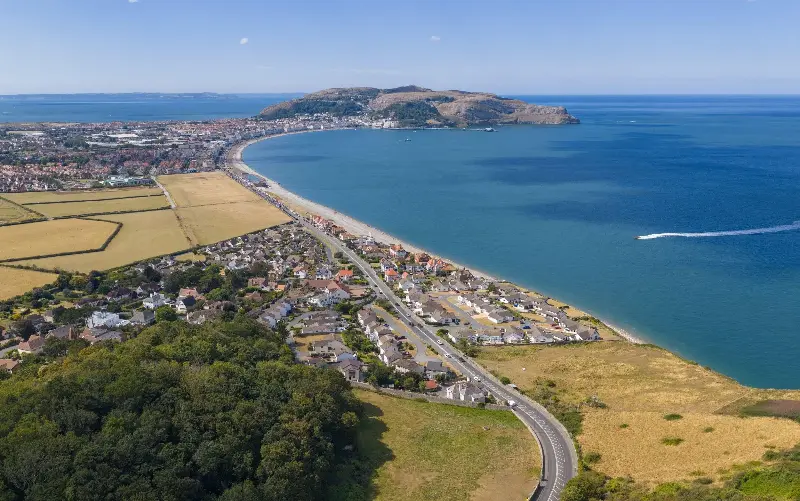
Goats know when they have a sweet deal. Back in 1837, the Shah of Persia presented Queen Victoria with a pair of Kashmiri goats as a coronation gift. Their long-horned descendants now roam free on Great Orme, a great thumb of limestone jutting out into the booming Irish Sea in North Wales.
During Covid, the goats had their moment of fame when they ran riot in the deserted streets of nearby Llandudno, whose old-school pier and Punch and Judy shows are but a stone-skim away.
The goats are not the only ones who have made themselves at home on this wondrously wild promontory. Millionaires are rather fond of it, too.
Marine Drive on Great Orme is right up there with the country’s most expensive streets, drawing comparisons with The Hamptons on Long Island in New York, where A-listers such as Gwyneth Paltrow, Beyoncé and Jennifer Lopez live in huge gated mansions.
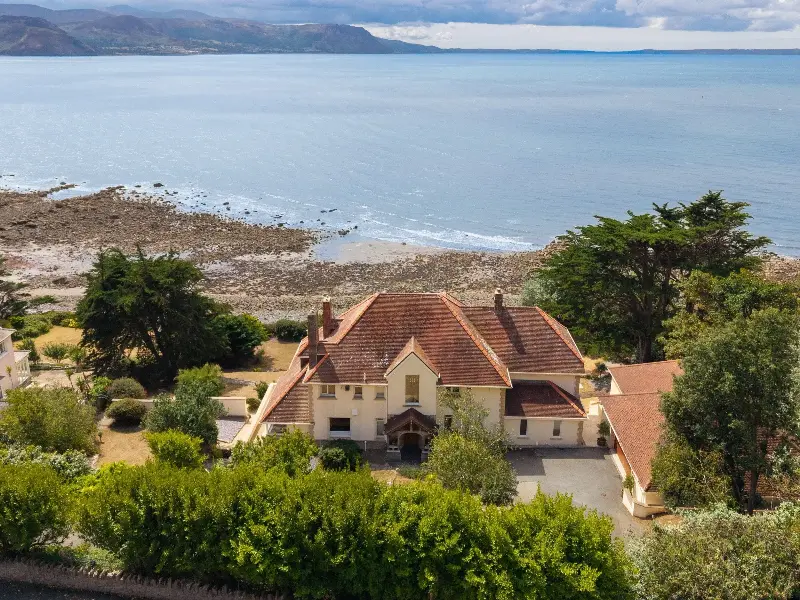
On Great Orme, clifftop homes swing from a grand Victorian pile, complete with underground tunnel and private beach, to a Mediterranean-style villa with front-row ocean views.
Millionaire’s Row
While Marine Drive matches The Hamptons in looks and price tags, in a way it is more exclusive still. The fact there are just a handful of properties here – and no future plans to build because of the headland’s conservation status – means you don’t just need money, you need patience.
Properties here are like gold dust; many never come up for sale, and are instead passed down through generations. One such house, however, has just come on to the market: Plas Craig 1922, a lavish 1920s pile available for £2.5m. The owners, who have been there for 20 years, are reluctantly selling up.
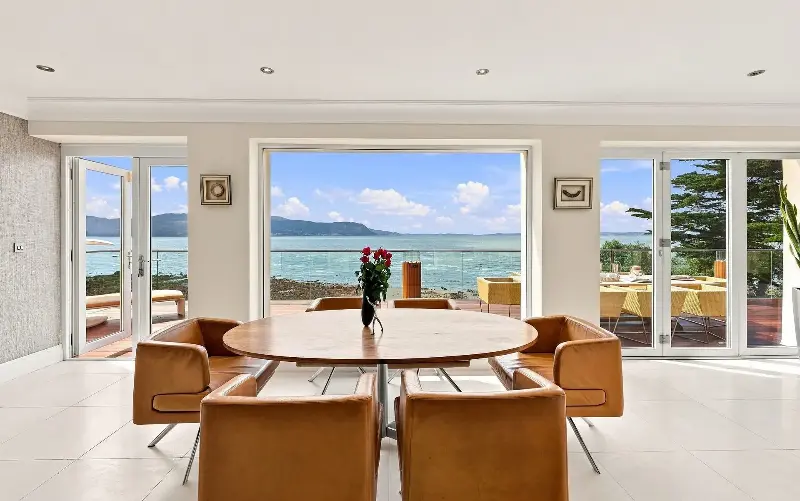
“Plas Craig is our heart home and I feel emotional about leaving it,” Elizabeth Gilmore-Jones, an owner, tells me. “We have been so lucky to live on Great Orme. It’s like a magical little kingdom. In one direction I can see Puffin Island and Anglesey, in the other Eryri. It’s so peaceful.
“Regardless of the weather we sit out on our large deck – be it for a morning coffee or to watch a storm out at sea. I’ve travelled and worked all over the world but there’s nowhere I would rather be.
“It’s a different world here – one more in tune with nature. We have a couple of regular seals that visit and in spring the lane behind the house lights up with glowworms.
“At night, even in the middle of winter, we leave our windows open to hear the lapping water and owls hooting. Today, I’m looking out across the Irish Sea and it’s dark, wet, overcast and devastatingly beautiful.”
Twin beaches
Great Orme can certainly rival The Hamptons for views of the crashing ocean and vast sands. There are two beaches for when the Welsh weather plays ball.
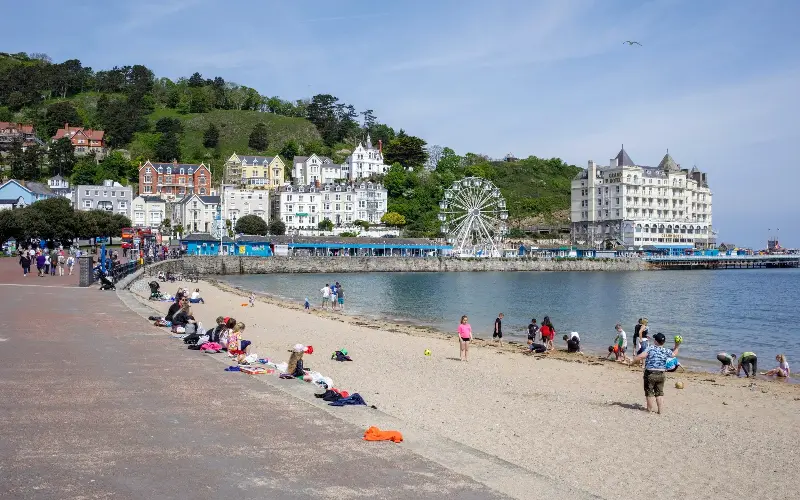
Llandudno’s North Shore Beach is the picture of happy family seaside holidays, with its sweep of shingle and sand, promenade, bandstand and the retro charm of the Victorian pier.
For shifting sands and arresting views of the peaks of Snowdonia and Anglesey puckering up on the horizon, make for quieter West Shore Beach instead. On clear days, the fiery sunsets are quite something.
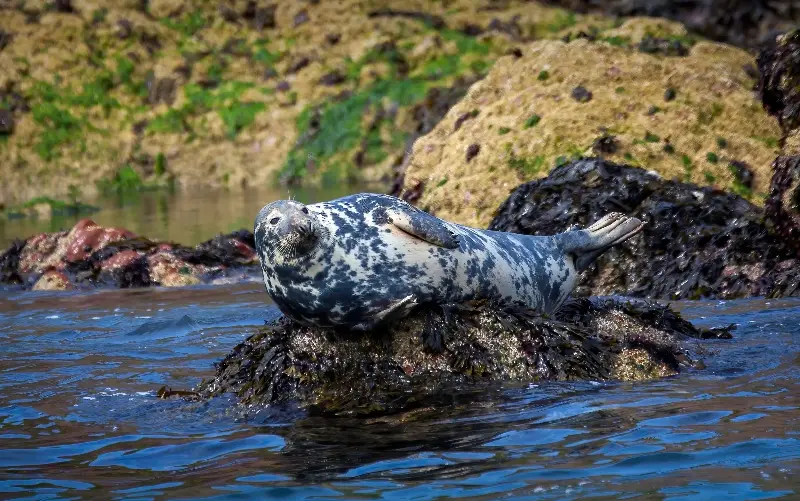
Shouldering up to the headland of Little Orme, just east, Penrhyn Bay is a pretty sand-and-shingle curve, with rock pools to wade in at low tide. Bring binoculars in autumn and early winter to spot a colony of up to 200 grey seals. October and November are primetime for seeing seals hauled out on the beach with their cute furball pups.
Nature at its wildest
Shaped by the changing tides and winds, rimmed by knife-edge cliffs 350 million years in the making and bearing the full brunt of the Irish Sea, Great Orme – taking its name from the Old Norse word for sea serpent – is entrancingly wild no matter what hand the weather deals you. The country park at its heart is a Site of Special Scientific Interest.
Like The Hamptons, Great Orme has a diverse array of marine habitats, including sheer limestone cliffs, grasslands, heathlands and woodlands.
Cowslips, rock rose and orchids bloom here in spring and summer, bringing clouds of endemic butterflies, including the silver-studded blue. Come autumn, billy goats clash horns in dramatic displays to attract a mate.
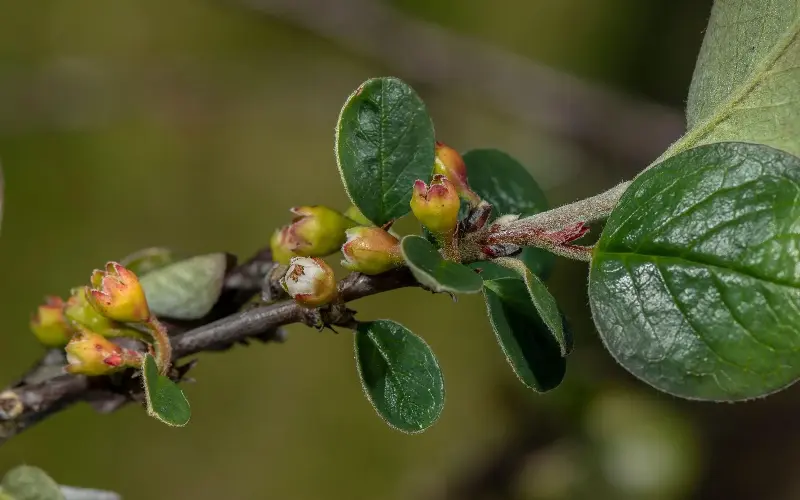
“Great Orme, or Pen y Gogarth in Welsh, is a truly wild place, supporting over 400 species of wild plants,” says Siôn Dafis, a countryside warden, who has worked on Great Orme for 10 years. “The rarest plant is the endemic Great Orme berry – only six plants survive in the modern age.
“Formerly an island, the dramatic cliffs are home to a spectacular seabird colony and a thriving population of chough. It’s an excellent place to witness the spring and autumn migrations – ring ouzel and dotterel are regular visitors.”
Embrace the wilds by hooking on to the four-mile circular Great Orme Nature Trail, which starts near the Great Orme Country Park visitor centre at the summit and takes the entire headland in its stride. The views are riveting from the first, with the waymarked path teetering precariously above the sea, and views cracking open of the Carneddau mountains, the Menai Strait, Anglesey and Liverpool Bay on cloudless days.
On the western side of Great Orme is the steep, rocky Monk’s Path, named after the penance-seeking monks who trod the path in medieval times. Legend has it, the trail’s vibrant green hue comes from the holy water they spilt.
Bronze Age mines and Celtic saints
In terms of history, Great Orme has the edge over The Hamptons. Long before the millionaires rocked up on Marine Drive, people found sparkle in the Great Orme Mines.
In 1987, the world’s biggest prehistoric copper mines were unearthed here while landscaping was underway for a new car park.
Now a self-guided tour of the mines catapults you back 4,000 years to the Bronze Age, when miners dug out deep underground tunnels and passageways using nothing but stones and bones.
Back in the sixth century, Celtic saints braved the storm-bashed seas between Ireland and Wales, including Welsh missionary St Tudno, who gave Llandudno its name.
After a bit of peace and quiet, he established a hermit cell on Great Orme, where the small stone church of St Tudno’s now stands, bearing witness to the ever-changing light and mood of the sea.
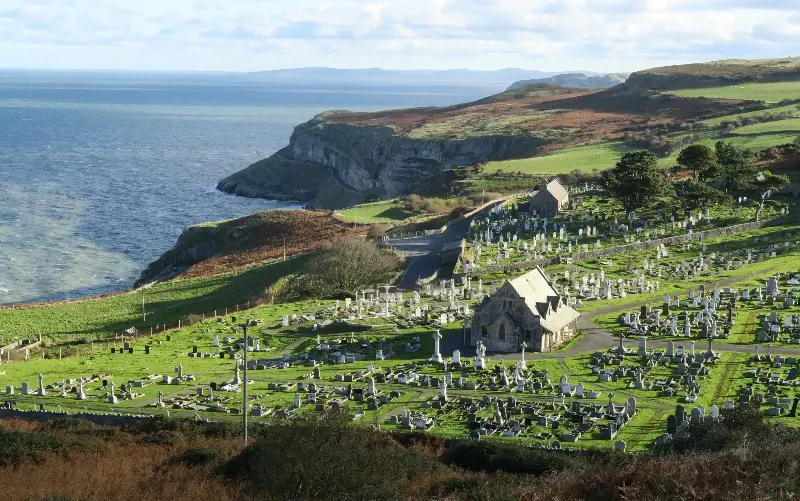
Celebrities are not sighted nearly as frequently on the storm-bashed coast of North Wales as The Hamptons, but Great Orme recently had its moment in the spotlight.
Grabbing the attention of film directors, the rugged headland and St Tudno’s featured as the backdrop for scenes in the 2025 movie The Gorge, starring Hollywood royalty Sigourney Weaver, Anya Taylor-Joy and Miles Teller.
How to do it
Where to stay
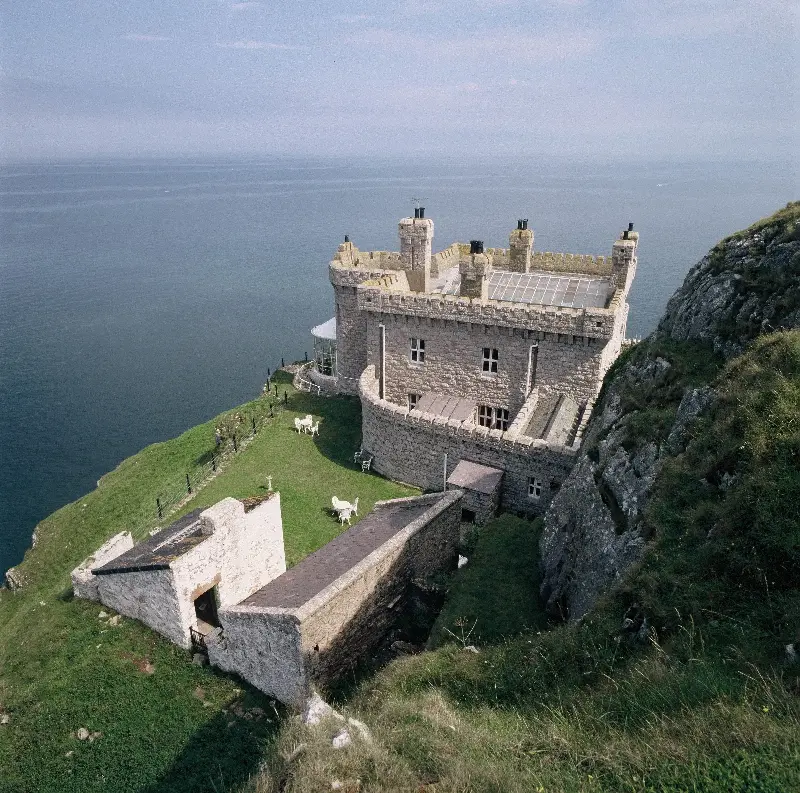
Plonked on the headland’s rugged cliffs, The Lighthouse (doubles from £230) has soul-soaring views out to sea. The Lighthouse was built in 1862 and the rooms channel Victorian vibes.
Opt for the principal keeper’s room for four-poster romance, or the converted lamp room, where the beacon once shone, for wraparound coastal views.
Just a step from Great Orme tramway, Lansdowne House (B&B doubles from £179) is another old-world charmer, with chandelier-lit rooms in cream and silver tones.
Try to snag room 15 for dress-circle views of Great Orme.
Where to eat and drink
Like the Hamptons, the food scene in this corner of North Wales prizes farm-to-fork produce and freshest seafood.
Going strong since 1908, when weary travellers rattled up in horse-drawn coaches, Rest & Be Thankful cafe perches on the cliffs near the lighthouse. It’s an inviting spot for coffee and homemade cake, soups, sandwiches.
Or drop by Caffè Cynefin near the summit. The cute shepherd’s-hut cafe does a fine line in everything from minted lamb burgers (courtesy of the family farm) to a properly cheesy Welsh rarebit, local bacon butties and Chilly Cow ice cream.
By night, the twinkling lights of Llandudno beckon. On the seafront is domed Dylan’s, a brasserie lodged in the handsomely revamped 1920s Washington Hotel.
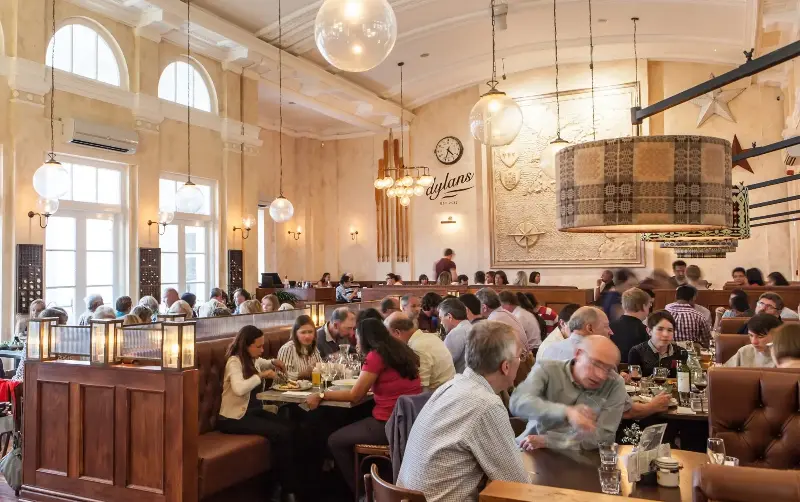
Here the seafood is an easy sell – from Menai mussels (wild as opposed to rope-grown) to Anglesey scallops.
After dinner, pop into a pub such as the rustic Cottage Loaf for a flavour of rural Wales with open fires and real ales.
If you don’t mind the 20-minute drive, edge east to beachfront Bryn Williams at Porth Eirias as sunset pops.
The views are striking and the menu puts imaginative riffs on local seafood in dishes such as crab rarebit with stout-and-onion sourdough. Pair them with zingy white wines from the nearby Gwinllan Conwy Vineyard.
How to get there
Llandudno has good train connections to the rest of Wales and Chester. Services to London Euston take around four hours and involve a change at Llandudno Junction.
An atmospheric way to reach the Great Orme summit is by hopping aboard Britain’s only cable-hauled tramway, a glorious ride little changed since 1902.
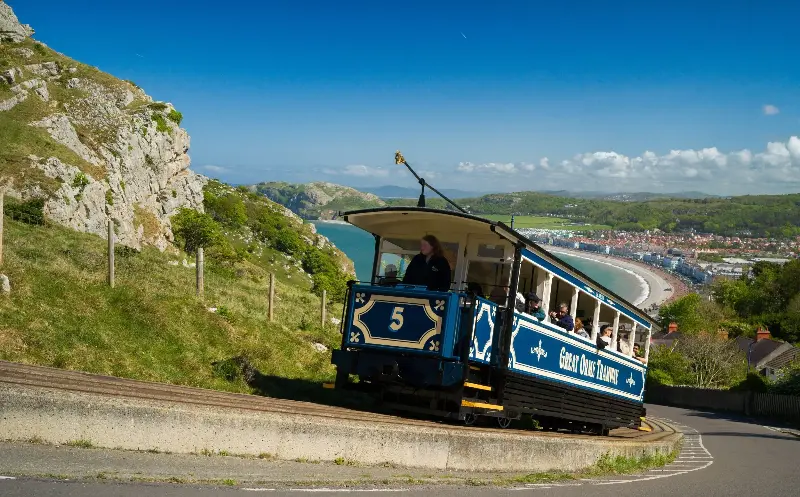
Or for lofty views out to sea, take the mile-long cable car from Happy Valley botanical gardens, right near Llandudno Pier. Both run roughly from Easter to October.
One of the UK’s most dramatic mini road trips, cliff-hugging Marine Drive is a five-mile toll road (cars pay £5.80, cyclists and walkers go free).