



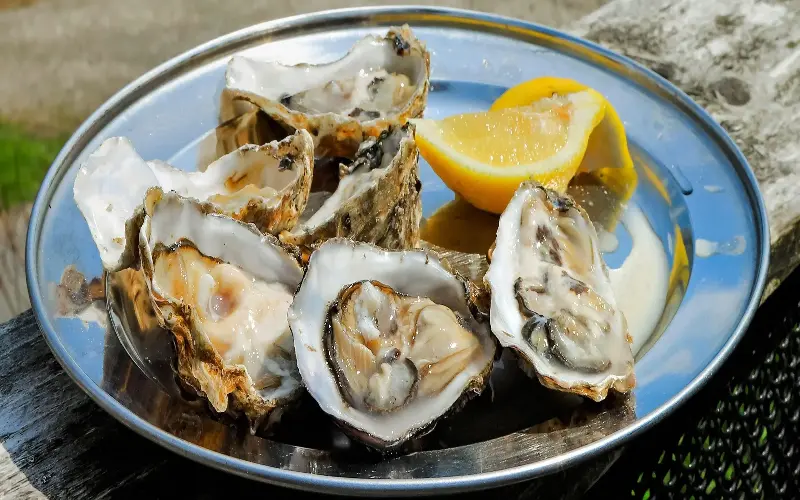
Scotland’s £15m shellfish industry is under threat as warming coastal waters trigger algal blooms, contaminating oysters and mussels.
Detection rates for toxic seafood harvested from Scottish waters surged after this summer’s heatwaves promoted the growth of the blooms formed from microscopic phytoplankton.
Molluscs such as oysters, mussels, scallops, cockles and razor clams feed on the plankton, concentrating any toxins they contain.
The toxins cannot be destroyed by cooking or freezing and consuming them can lead to severe stomach upsets and, in extreme cases, memory loss, paralysis and even death.
This year’s high detection rate has forced some fisheries to close for a month, threatening livelihoods and forcing hotels and restaurants to seek out alternative supplies.
Nick Lake, of the Association of Scottish Shellfish Growers, said that while a traffic-light warning system introduced by Food Standards Scotland meant the threat to the public was minimal, the effect on businesses could be significant.
He said: “The algal blooms seem to me to be occurring earlier and they are more pronounced and going on for longer. It’s a natural phenomenon, but it does impact the shellfish flesh so it is a concern for food safety.
“There should be zero risk to the consumer with the measures in place, but we have seen periods when we are not able to harvest.”
While shellfish flush the toxins out within a few weeks and become safe to eat again, he said this year’s bans had posed cashflow problems and pushed harvests later into the year, when seas will be rougher, disrupting deliveries.
Mussels could also grow beyond the standard size and be rejected by supermarkets.
Scotland produces 12,000 tons of the bivalves worth more than £13m each year, together with about 220 tons of oysters. It also harvests 24,000 king scallops that can sell for £60 per kg.
Since different fisheries are affected at different times, seafood cooperatives have mostly been able to maintain supplies, though that would not be so in the case of longer bans.
Mr Lake said: “If you couldn’t harvest for two or three months that would be a major problem.”
Risk of toxins
Scotland suffers more from the blooms because its warm waters are fed by the Gulf Stream, while long daylight hours in summer help sustain the growth of plankton.
The evaluation of the level of risk from toxins includes the testing of water samples for algae by the Scottish Association for Marine Science (SAMS) and of shellfish by the Centre for Environment, Fisheries and Aquaculture Science.
Prof Keith Davidson, of the SAMS, said 2026 had been a particularly bad year for phytoplankton from the genus dinophysis, which he said produces a range of toxins.
Detection levels for toxicity have been most severe on Scotland’s west coast and the Lochaber region, including Loch Moidart, Loch Sunart and parts of Loch Linnhe.
Prof Davidson said it was not entirely clear why phytoplankton produce the toxins, and while it may be to deter small predators, such as the larger zooplankton, molluscs are not put off.